

Access Control System Integration
Magnetic Lock King provides professional integration of magnetic lock systems with modern access control technology for commercial properties that require reliable, scalable, and secure entry management. Integrating a magnetic lock with an access control system transforms a basic door into a controlled security point. Instead of relying on traditional keys, businesses gain the ability to manage who enters, when they enter, and which areas they can access.
What Access Control Integration Means
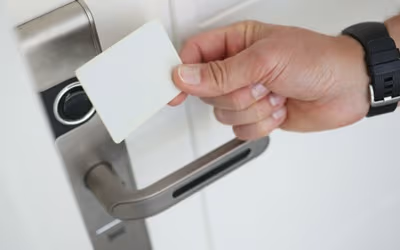
Access control integration connects a magnetic lock to electronic credential systems such as keypads, proximity card readers, fob systems, biometric scanners, mobile app access, or centralized building management platforms. The magnetic lock provides the physical holding force, while the access control system determines when the door should unlock.
This integration allows administrators to grant or revoke entry permissions without changing physical hardware. When an employee leaves, credentials can be disabled instantly rather than replacing locks or collecting keys. This increases security while reducing operational cost.
Why Magnetic Locks Pair Well With Access Control
Magnetic locks are particularly suited for electronic access control because they operate through electrical current rather than mechanical latching. Their fail-safe design means that when power is interrupted, the door releases. This characteristic aligns well with building safety requirements and fire code compliance when properly configured.
Maglocks also have minimal moving parts, reducing mechanical wear. When integrated correctly, they provide consistent performance across high-traffic commercial environments.
Components of an Integrated System
A properly integrated magnetic lock access control system typically includes:
- Electromagnetic lock and armature plate
- Regulated power supply
- Access control panel or controller
- Credential reader (keypad, card reader, fob reader, biometric device)
- Request-to-exit device or motion sensor
- Emergency release button
- Fire alarm interface (when required)
- Battery backup system
Each component must function cohesively to ensure security, safety, and consistent door operation.
Our Integration Process
We begin with a system evaluation to determine the property’s access requirements. Some facilities require single-door standalone control, while others need centralized management across multiple entry points.
Next, we verify the magnetic lock’s holding-force rating and compatibility with the access control hardware. We confirm proper voltage supply, amperage capacity, and wiring routes before establishing controller connections.
Once physical wiring is complete, we configure system logic. This includes credential recognition, unlock duration timing, door status monitoring, and alarm response programming. We test entry and exit functions repeatedly to ensure smooth performance.
Keypad and Code-Based Entry
Keypad integration allows users to enter a programmed code to unlock a magnetic lock. This solution is practical for small offices, storage areas, and restricted staff-only zones. Codes can be changed easily when personnel changes occur.
We configure time-based access if required, allowing certain codes to function only during scheduled hours.
Card and Fob Access Systems
Proximity card and key fob systems provide convenient credential-based entry. Users simply present their card or fob to the reader, which signals the controller to release the magnetic lock.
Lost or stolen credentials can be deactivated instantly without hardware changes. This reduces security risk compared to traditional keys.
Biometric Integration
For high-security environments, biometric devices such as fingerprint or facial recognition scanners can be integrated with magnetic locks. These systems verify identity before sending a release signal to the controller.
Biometric integration is often used in data centers, laboratories, and secure corporate facilities where identity verification is critical.
Mobile and Remote Access Control
Modern access control systems support mobile credentials, allowing authorized users to unlock doors through smartphone applications. Remote management enables administrators to grant temporary access, monitor entry logs, and adjust permissions from a centralized dashboard.
Magnetic locks integrate smoothly with these technologies when properly configured.
Emergency and Safety Compliance
Integrated magnetic lock systems must comply with life-safety regulations. We ensure that request-to-exit devices, motion sensors, and push-to-exit buttons release the door immediately when activated. Fire alarm tie-ins are configured so that doors unlock automatically during emergency events.
Battery backup systems can be installed to maintain operational stability during short-term power interruptions while preserving safe egress functionality.
Door Monitoring and Audit Trails
Access control integration allows door monitoring and event logging. Administrators can track who entered specific areas and at what times. This data supports accountability and improves internal security oversight.
Door position sensors can also be installed to alert management if a door is left open or forced.
Multi-Door and Multi-Site Integration
For larger facilities, multiple magnetic locks can be integrated into a single centralized control system. This allows administrators to manage credentials across several doors or even multiple buildings.
Scalable integration supports future expansion without replacing core hardware.
Power Management and Electrical Stability
Stable electrical supply is essential for consistent access control performance. We evaluate transformer capacity, ensure proper voltage output, and protect wiring connections. Properly regulated power prevents buzzing, inconsistent release, or weakened holding force.
Surge protection and battery backup systems add additional reliability.
Maintenance and Ongoing Support
Routine maintenance ensures long-term system stability. Periodic inspections verify magnet alignment, wiring integrity, and controller performance. Firmware updates may also be required for certain digital systems.
Proactive maintenance reduces the likelihood of unexpected downtime.
Industries That Benefit From Integration
- Corporate offices with tiered access zones
- Medical facilities requiring restricted entry areas
- Educational institutions controlling staff-only areas
- Warehouses with secure inventory zones
- Retail properties with back-office security needs
- Commercial buildings with multiple tenants
Each environment benefits from flexible credential management and controlled entry.
Advantages of Professional Integration
- Improved building security
- Centralized credential management
- Reduced need for physical key replacement
- Enhanced compliance with safety codes
- Scalable system expansion
- Reliable synchronization between hardware and software
Professional integration ensures that each component communicates correctly and that the system performs consistently under daily operational demands.
Future-Proofing Your Security System
Technology continues to evolve, and properly integrated magnetic lock systems can adapt to new credential methods and software updates. Designing a system with scalability in mind protects your long-term investment.
Whether expanding to additional doors, upgrading to mobile credentials, or implementing advanced monitoring tools, a properly integrated system provides flexibility.
Schedule Access Control Integration Service
Magnetic Lock King delivers professional integration of magnetic locks with modern access control systems. From single-door keypad setups to complex multi-door networked solutions, our team ensures secure, stable, and compliant performance.
Contact us to schedule access control integration service and enhance your property’s security with advanced, professionally configured entry management solutions.